Expert Guide
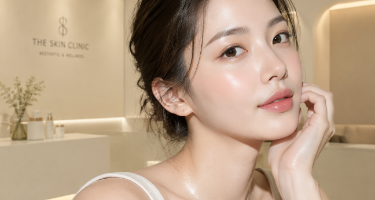
Honey glow, dewy glow, radiance—these are actually different skin states: how dermatology tells them apart
DIORE CLINIC
4.8(400+)
"Honey glow," "dewy glow," and "radiance"—in fact, they refer to the same optical phenomenon
While looking in the mirror, you may have at least once felt that "my skin looks a bit more radiant today." Beauty ads are full of terms like "radiance," "dewy glow," and "honey glow," but defining these words precisely in a clinical setting is surprisingly difficult.
Interestingly, over the past few years, the dermatology field has rapidly accumulated research to define, measure, and improve "skin glow / radiance" academically. To give the conclusion first, radiance is a matter of how skin and light interact.
Three stages of light passing through the skin
In dermatology, radiance is essentially an optical phenomenon. When light hits the skin, it follows three paths, and when these three paths are balanced, we perceive skin as "glowing."
1. Surface reflection
When the skin surface is smooth and holds an appropriate amount of moisture, light reflects cleanly at a consistent angle. If the surface is rough or dead skin cells are lifting, light scatters in all directions, creating a dull impression.
2. Absorption by pigment
Melanin (skin pigment) and hemoglobin (skin redness) absorb part of the light. The more evenly pigment is distributed, the more uniform the tone becomes, while patchy pigmentation (melasma, spots, redness) reduces radiance.
3. Dermal back-scattering
Some light enters the dermis and then bounces off collagen fibers, scattering back toward the surface. This is the process behind what people often call "radiance that seems to glow from within".
Recent studies define radiance as the 'absence of flaws'
A 2024 study by Goodman et al. published in Journal of Cosmetic Dermatology presented a new perspective on defining radiance. Rather than measuring radiance with a single index, the researchers proposed a framework that evaluates how few factors detract from radiance.
The factors that diminish radiance are broadly divided into three categories.
- Tone-related: redness, telangiectasia, pigmentation (melasma, post-inflammatory hyperpigmentation), hypopigmentation
- Surface texture-related: rough texture, buildup of dead skin cells, enlarged pores, fine lines
- Dermal structure-related: reduced collagen, loss of elasticity
Around the same time, researchers led by Sachdev in India developed an objective tool for assessing radiance (the MSCR Glow & Radiance Index) and proposed that five elements should be evaluated together: hydration, surface uniformity, tone uniformity, texture, and shine.

The four pillars of radiance in the clinic
From a dermatological perspective, creating radiance means optimizing the three optical factors above at the same time. At Dioré Clinic, we also look at these four pillars when evaluating a patient’s radiance.
① Dermal hydration — treatments such as hyaluronic acid-based skin boosters or Rejuran increase the dermis’ ability to retain water, enriching back-scattering.
② Collagen density — dermal-stimulating treatments such as HIFU (Ulthera, Shurink, Sofwave), RF (Thermage, InMode), and Potenza improve the density and alignment of collagen fibers, helping light scatter more effectively.
③ Pigment uniformity — picosecond lasers (such as PicoSure), IPL, and toning treatments even out melanin distribution and refine tone.
④ Surface texture — chemical peels, mild exfoliation, and superficial lasers clear away dead skin cells and smooth the surface, making surface reflection more uniform.
Radiance can improve even if only one of these four pillars gets better, but the impression of truly "glowing from within" is completed only when all of them are balanced together.
When foreign patients in Gangnam ask about radiance
When foreign patients ask, "Please recommend one treatment for glow," that question usually includes one or more of the four pillars. This is a common pattern in consultations.
- "Will Rejuran create radiance?" — Rejuran mainly raises the dermal hydration pillar. If the collagen-density pillar (Ulthera, Thermage) or the pigment-uniformity pillar (toning) is also insufficient, we usually recommend a combination approach rather than Rejuran alone.
- "Which is better for radiance, Thermage or Sofwave?" — Both belong to the collagen-density pillar, but their approaches differ. We compare them based on skin thickness and desired downtime.
- "Is Lituo also a radiance treatment?" — Since Lituo targets collagen production, it relates to both the dermal hydration and collagen-density pillars. We first look at the skin directly to see which pillar is more lacking before recommending it.
Four rules for maintaining radiance in daily life
Radiance is not limited to procedures. Maintaining the radiance gained through treatment ultimately comes down to daily care.
- Protect the moisture barrier — Use products containing ceramides, NMF (natural moisturizing factors), and hyaluronic acid to maintain the skin barrier’s water-retention capacity.
- Sun protection — This is one of the strongest anti-aging habits for preventing collagen breakdown and pigmentation problems.
- Avoid excessive exfoliation — Too much peeling can actually cause surface roughness and barrier damage.
- Antioxidant care — Vitamin C and niacinamide help improve pigment uniformity and the dermal environment.
Frequently asked questions
Q1. Are radiance and skin tone (brightness) the same concept?

No. Tone refers to the color itself caused by melanin and hemoglobin, while radiance is a broader concept that combines how tone, surface, and dermis interact with light. Skin can have rich radiance even if the tone is dark, and conversely, bright skin can still look dull.
Q2. How is radiance created by makeup different from radiance in the skin itself?
Cosmetic radiance mainly works by artificially enhancing surface reflection (pearlescent particles, film-forming ingredients). It may look similar on the surface, but true skin radiance is a three-dimensional light effect created when dermal back-scattering is also abundant.
Q3. Can radiance be created with just one treatment?
Radiance can improve immediately after a single skin booster or peel. However, depending on the procedure, the effect typically lasts from several days to several weeks. For sustained radiance, cumulative care that improves the dermal environment is needed.
Q4. Can oily skin also be said to have radiance?
Gloss and radiance are different concepts. Shine caused by excess sebum is a state of overly strong surface reflection, which is actually far from balanced radiance. True radiance appears when the skin surface is smooth and the oil-water balance is appropriate.
Q5. What treatment is most effective for radiance?
Rather than "one most effective" treatment, we first assess which pillar is lacking based on the patient’s skin condition. If dermal hydration is lacking, a skin booster may come first; if collagen has weakened, HIFU or RF may be prioritized; if tone is uneven, toning may be the first choice. At Dioré Clinic, we identify the factors reducing radiance first and then suggest the right combination.
Closing
Radiant skin is not simply "skin that shines," but the result of a smooth surface, even tone, and healthy dermis all being present at the same time. There is certainly room to improve it with cosmetic products, but true radiance that glows from within ultimately comes from the structural health of the skin itself.
Skin radiance is not a goal that ends with a single procedure, but rather a journey of understanding your skin accurately and filling in the missing pillars. As the head doctor of Dioré Clinic, this is why I look first at which pillar is holding radiance back every time I examine a patient’s skin.
Latest Expert Guides
View allVision Correction
SMILE vs. PRK vs. ICL: What Are These Eye Surgeries?
EYEREUM Eye Clinic

Dermatology
Ultherapy in Hongdae, Seoul 300 vs. 600 Shots: Which Is Right for You?
Reverse Clinic Hongdae Branch

K-Beauty
A Review of Forehead Lift Surgery at Sinsa Station in Gangnam That Created a Brighter, Fresher Look
Luho Plastic Surgery
