Expert Guide
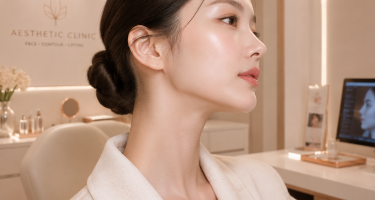
A procedure that changes the direction of facial pull — the real principle behind the name "London Botox"
DIORE CLINIC
4.8(400+)
A procedure that changes the direction of facial pull — the real principle behind the name 'London Botox'
💡 At a glance
· 'London Botox' is not a medical textbook term, but a Korean colloquial nickname for 'lifting Botox,' referring to an injection procedure that selectively relaxes the depressor muscles that pull the face downward and restores the balance of pull upward.
· The core principles are twofold — ① muscular rebalancing between elevator and depressor muscles, and ② the microdroplet technique (Microbotox), which injects diluted toxin densely into the superficial layer of the skin.
· The procedure takes 10~20 minutes, with almost no downtime. Results begin to appear in 3~7 days, peak around 2 weeks, and last about 3~4 months (varies by individual).
· It is recommended for people in their 30s to 40s who are in the early stage of sagging, when the jawline has begun to blur, and who want to keep their facial expression while simply refining their impression.
What exactly is behind the name 'London Botox'?
London Botox (lifting Botox, Botox lifting, Lifting Botox, Microbotox, Nefertiti Lift) is a non-surgical injection procedure that uses botulinum toxin to recalibrate the face's 'direction of pull' and refine the jawline and lower face. First, one point should be made clear. 'London Botox' is not an official medical term listed in textbooks, but a marketing nickname referring to Botox injection techniques for lifting purposes. Although the name sounds new, the principles behind it are essentially a combination of two techniques that have already been validated in papers for nearly 20 years — the Nefertiti Lift and Microbotox. So in this article, we will focus on the principles rather than the name.
| Item | Details |
|---|---|
| Procedure type | Injection procedure (non-surgical) |
| Mechanism | Selective relaxation of depressor muscles + superficial microinjection to rebalance the facial pull upward |
| Procedure time | 10~20 minutes |
| Anesthesia | Numbing cream (or none) |
| Downtime | Almost none (needle marks or minor bruising may remain for 1~3 days) |
| Pain | 2~3 / 10 |
| Onset | Begins after 3~7 days, peaks around 2 weeks |
| Duration | About 3~4 months |
| Recommended frequency | Repeat every 3~4 months |
| Indications | Early jawline blurring, sagging toward the mouth and neck, neck bands, natural refinement of facial impression |
| Contraindications | Pregnancy and breastfeeding, neuromuscular disorders such as myasthenia gravis, history of hypersensitivity to botulinum toxin |
Principle 1 — The face is a tug-of-war between elevator and depressor muscles
It is widely known that Botox relaxes muscles. Botulinum toxin blocks the release of acetylcholine (the substance that carries the signal to 'contract' to the muscles) at the nerve endings, temporarily reducing the strength of the injected muscle. But how can an injection that 'stops muscles from moving' lift the face? The answer lies in the structure of facial muscles. In the face, elevator muscles that pull tissue upward and depressor muscles that pull it downward work in pairs like a tug-of-war. Representative depressor muscles include the platysma, which broadly covers the front of the neck and pulls the jawline downward, and the depressor anguli oris (DAO), which pulls down the corners of the mouth. As we age, this downward pull becomes relatively dominant, causing the jawline to collapse and the area around the mouth to look saggy. Lifting Botox is a procedure that selectively releases only the force on the depressor side in this tug-of-war. When the depressor muscles relax, the elevator muscles become relatively dominant, and the resultant force (vector) acting on the facial tissue shifts upward. This is called muscular rebalancing.

The representative study applying this principle to the jawline is the 'Nefertiti Lift' published by Levy (2007, Journal of Cosmetic and Laser Therapy). This technique injects toxin along the lower border of the mandible and the upper part of the posterior band of the platysma to release the force by which the platysma pulls the face downward. In clinical experience with 130 patients, it was reported that jawline recontouring effects were observed even with low doses of 20 units or less, with very high patient satisfaction and a low incidence of side effects. However, excessive injection in the neck has been reported to cause side effects such as swallowing discomfort or neck weakness, so dose and injection-point design are the key to this procedure.
Principle 2 — Leave the deep muscles alone and refine only the superficial layer attached to the skin
The second axis is injection depth. London Botox-type procedures dilute toxin with saline and turn it into very small droplets, then inject it densely not deep into the muscle but into the dermis or the layer just below it. This technique was systematized as Microbotox by Wu (2015, Plastic and Reconstructive Surgery). It involves diluting toxin to 20~28 units per 1 mL and dividing it into 100~120 points for injection at the interface between the dermis and the superficial muscle layer, with clinical experience from more than 1,867 cases reported. This partially relaxes only the superficial muscle fibers attached beneath the dermis while preserving the function of the deep muscle layer, so facial expressions remain natural while only fine wrinkles and pulling on the skin surface are refined. It has also been reported to soften horizontal neck wrinkles and vertical bands, and to make the platysma adhere more closely to the jawline, sharpening the jaw-neck angle. As an added effect, reduced activity of sebaceous and sweat glands can improve skin texture and reduce shine, which is another feature of this technique. In summary, the lifting Botox referred to as London Botox is the combination of two design variables: ① depressor rebalancing (what to relax) and ② superficial microinjection (how shallow and how finely to divide it). The same drug can produce completely different results depending on this design.
Recommended candidates and clear limitations
It is recommended for early to mid-stage sagging when the jawline starts to blur, when the impression is pulled downward toward the mouth and neck, and for people in their 30s and 40s whose lower face looks especially heavy in photos. It is suitable for those who want to refine their impression without losing facial expression. On the other hand, the limitations are clear. Botox lifting is a procedure that changes the direction of muscular pull; it does not physically lift stretched skin or sagging fat. For moderate or more advanced aging accompanied by skin laxity and fat descent, the effect as a stand-alone treatment is limited, and in such cases a practical solution is to combine it with ultrasound (HIFU) or RF lifting such as Ultherapy and Thermage, or thread lifting. If treatments that induce collagen remodeling are planned together with toxin that adjusts muscular pull, each procedure can complement what the other cannot address.
Procedure process and aftercare
The procedure is completed in 10~20 minutes after assessing facial expression patterns and designing the injection plan, applying numbing cream, and then performing microinjections at the designed points with a thin needle. On the day after the procedure, avoid rubbing or pressing the injection sites (such as massage or sleeping face down), and refrain from saunas, alcohol, and strenuous exercise for a few days. Washing your face and light makeup are possible a few hours later on the same day.
Diore clinical principles
At Seoul Diore Clinic, we approach lifting Botox not as a 'dose-based procedure' but as a 'design-based procedure.' The head doctor personally evaluates the patient's facial expression patterns and depressor muscle activity, and individually designs the injection points, depth, and dilution concentration, using genuine toxin in precise amounts. In particular, for the neck area, we prioritize minimizing the risk of side effects such as swallowing discomfort by following the principle of low-dose distributed injection. For patients whose sagging has progressed, rather than aggressively recommending toxin alone, we also plan the sequence in combination with ultrasound and RF lifting.

What foreign patients consulting in Gangnam should know
For patients visiting from overseas, the most important task is to complete an accurate diagnosis and procedure within a short stay. Clinics in the Gangnam area often operate multilingual consultations to meet this demand, and some arrange schedules that begin with remote pre-visit consultation to understand the facial pull structure and degree of sagging, followed by treatment on the day of the visit. Depending on whether the sagging is due to a muscle pull-direction problem or whether skin and fat laxity are also progressing, the choice between toxin alone or a combination with device lifting such as Ultherapy or Thermage will differ, so clearly distinguishing this at the diagnostic stage affects outcomes even within a short stay schedule.
Frequently asked questions (Q&A)
Q1. What is the difference between London Botox and regular Botox?
The drug itself is the same botulinum toxin. The difference is in the purpose and design. While regular wrinkle Botox focuses on deeply relaxing muscles that create wrinkles, such as those in the forehead and glabella, lifting Botox referred to as London Botox selectively relaxes the depressor muscles that pull the face downward, and injects diluted toxin in small amounts into the superficial layers of the skin to shift the balance of pull upward.
Q2. When does London Botox start to work and how long does it last?
Typically, changes begin after 3~7 days, peak around 2 weeks, and are maintained for about 3~4 months. There are individual differences depending on muscle use habits and metabolic speed, and repeating the procedure every 3~4 months tends to maintain the perceived effect more steadily.
Q3. My sagging has progressed quite a bit — can London Botox lift it on its own?
We honestly have to say that it may not be enough on its own. This is because toxin only readjusts muscular pull and cannot reverse stretched skin or fat. In Diore's clinical approach, in such cases we first consider a combined plan with HIFU and RF lifting to create tissue tightening and collagen regeneration, while using toxin to refine the direction of pull.
Q4. I'm worried my facial expression will become awkward or my smile will look unnatural after the procedure.
Injection depth and dose design are the key factors. The Microbotox method is designed to partially relax only the superficial muscle fibers attached to the dermis while preserving deep muscle function, so expression preservation is the very goal of the technique. However, excessive injection or injection into the wrong layer can cause unnatural expressions or asymmetry, so it is important to receive treatment from a clinician who designs the procedure based on anatomical evaluation.
Q5. What should I look for when choosing a clinic in Korea for London Botox?
We recommend checking four things. ① Whether they actually evaluate facial expression patterns and depressor muscles before treatment ② Whether they use genuine toxin in precise amounts ③ Whether they have safety standards such as low-dose principles for the neck area ④ Whether they also design combination treatment with device lifting depending on the stage of sagging. Seoul Diore Clinic operates with these four as standard protocol, and the head doctor personally handles everything from consultation to procedure.
Conclusion
Even if the name London Botox comes and goes like a trend, the principles behind it — depressor rebalancing and superficial microinjection — are a validated approach accumulated in the literature. What matters is not the name, but getting an accurate diagnosis of whether the cause of your facial sagging is muscular pull or skin and fat laxity. If you are considering treatment in Korea, Seoul Diore Clinic can analyze the pull structure of your individual face and suggest toxin alone or a combined plan.
ℹ️ This content is intended to provide general medical information and does not replace individual medical care. Treatment results may vary depending on the condition of each person's skin, and accurate diagnosis and consultation should be conducted with a skin and aesthetic medical specialist.
References
- Levy PM. The 'Nefertiti lift': a new technique for specific re-contouring of the jawline. J Cosmet Laser Ther. 2007;9(4):249-252.
- Wu WTL. Microbotox of the Lower Face and Neck: Evolution of a Personal Technique and Its Clinical Effects. Plast Reconstr Surg. 2015;136(5S):92S-100S.
- Fabi SG, et al. Microtoxin for Improving Pore Size, Skin Laxity, Sebum Control, and Scars. Aesthet Surg J. 2023;43(9):1015-1024.
Latest Expert Guides
View allVision Correction
SMILE vs. PRK vs. ICL: What Are These Eye Surgeries?
EYEREUM Eye Clinic

Dermatology
Ultherapy in Hongdae, Seoul 300 vs. 600 Shots: Which Is Right for You?
Reverse Clinic Hongdae Branch

K-Beauty
A Review of Forehead Lift Surgery at Sinsa Station in Gangnam That Created a Brighter, Fresher Look
Luho Plastic Surgery
